










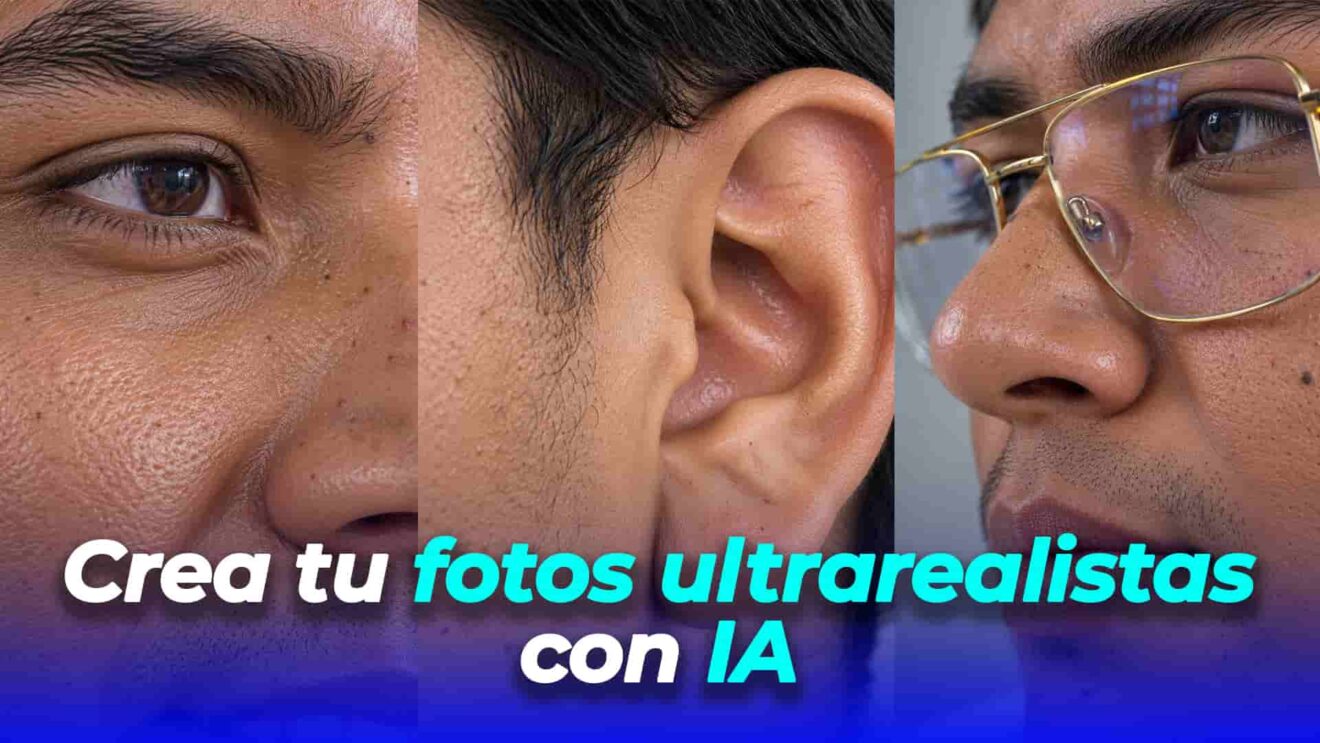

¿Alguna vez has querido convertir una fotografía normal en una imagen con un nivel de detalle tan extremo que puedas apreciar los poros de la piel, pequeños cabellos e incluso los detalles de una oreja en primer plano?
Con la inteligencia artificial ahora es posible crear imágenes ultra realistas utilizando una fotografía como referencia, manteniendo las características de la persona y cambiando completamente el encuadre, la cámara o el nivel de acercamiento.
En este tutorial te compartimos el prompt completo que puedes copiar y utilizar con tu propia fotografía para experimentar con imágenes macro extremadamente detalladas.
¿Qué puedes crear con este prompt?
El objetivo de este prompt es generar una fotografía de estilo macro profesional, utilizando tu fotografía original como referencia.
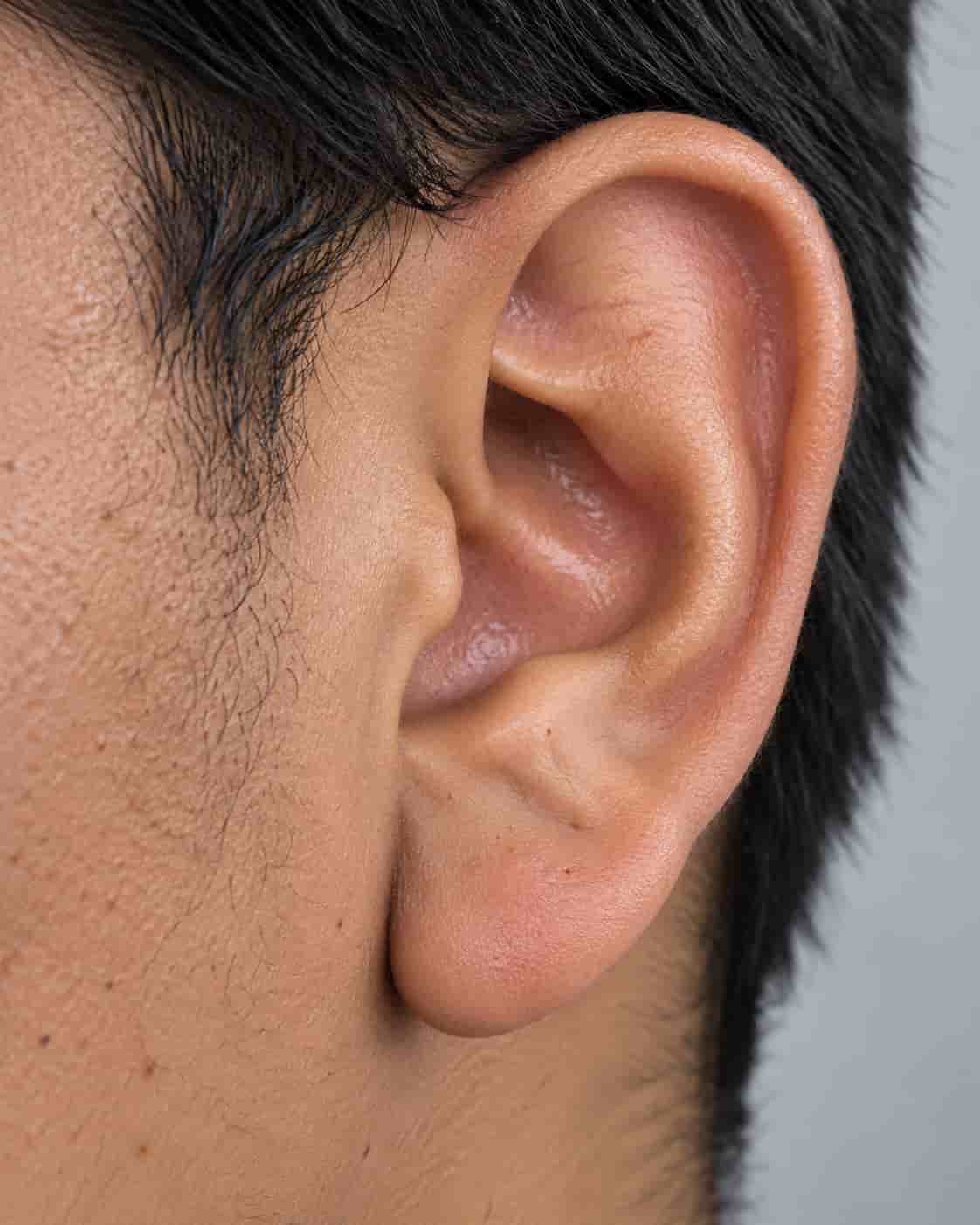
En nuestro ejemplo pedimos a la IA realizar un acercamiento extremo a la oreja derecha, intentando conservar características importantes de la fotografía original como:
- Tono natural de piel.
- Cabello y línea del cabello.
- Edad aparente.
- Características físicas reconocibles.
- Textura natural de la piel.
- Pequeños cabellos y vello facial.
- Poros e imperfecciones.
- Variaciones naturales del color de la piel.
Además, el prompt simula una fotografía realizada con una cámara profesional full-frame y un objetivo macro de 100 mm.
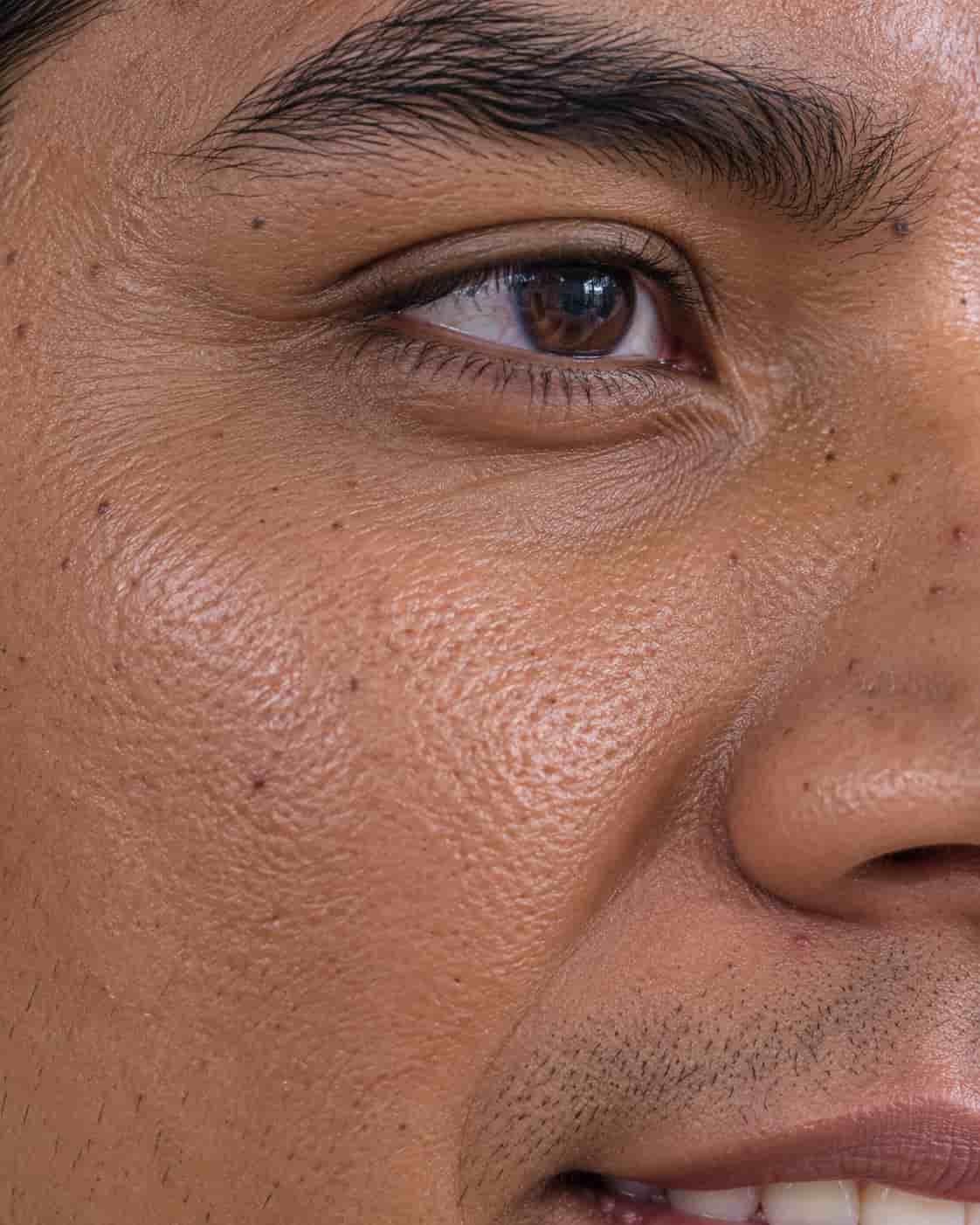
El resultado busca alejarse de las típicas imágenes de IA con piel excesivamente lisa o apariencia plástica.
Cómo utilizar el prompt
El proceso es muy sencillo:
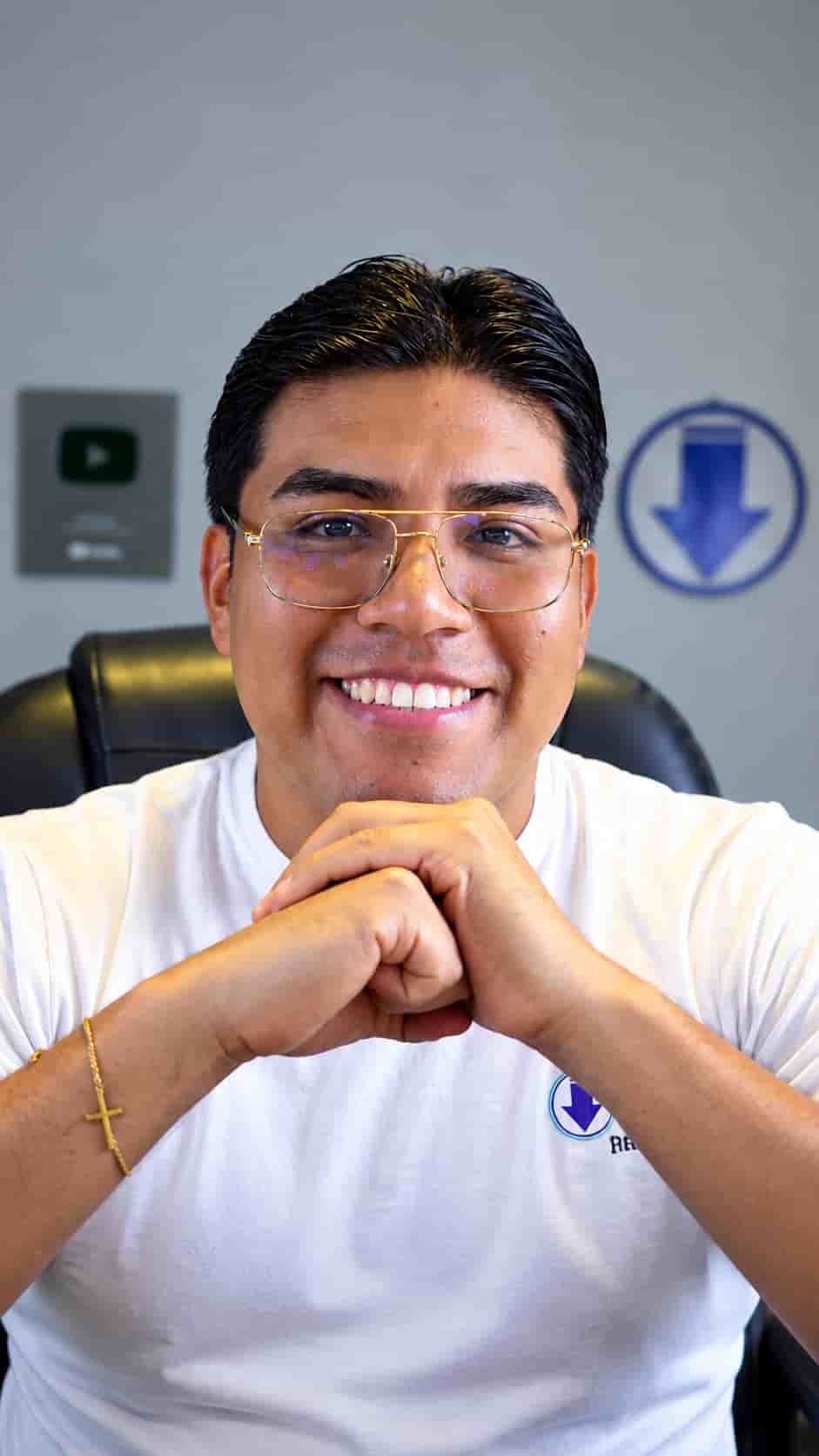
- Abre ChatGPT y accede a una conversación donde puedas generar imágenes.
- Sube una fotografía tuya o de una persona para la que tengas permiso de uso.
- Utiliza preferentemente una fotografía clara, bien iluminada y con buena resolución.
- Copia el prompt que encontrarás más abajo.
- Pégalo junto con tu fotografía.
- Espera a que la inteligencia artificial genere el resultado.
💡 Consejo: cuanto mejor se distingan el rostro, el cabello y la piel en la fotografía original, más información visual tendrá la IA para intentar conservar esas características.
Generate an ultra-high-resolution 8K extreme macro photograph using the attached reference photograph as the strict identity reference.
The subject MUST be the exact same adult person shown in the reference image. Preserve their real identity, natural skin tone, facial structure, hair color, hairline, approximate age and all recognizable physical characteristics.
Do not beautify, reinterpret, feminize, masculinize, age, de-age or replace the person with a different subject.
Capture an extreme photographic macro close-up of the subject’s RIGHT EAR.
Position the camera directly beside the right side of the subject’s head, with the ear occupying approximately 80–85% of the frame. Only a narrow portion of the right temple and cheek should remain visible along the edge of the composition.
Keep the subject’s hairstyle, hair color and hairline consistent with the supplied reference photograph.
Show individual hair strands around the sideburn and temple, including naturally irregular flyaway hairs and tiny baby hairs.
Render the ear with anatomically accurate and completely natural detail: realistic helix, antihelix, tragus, antitragus, concha and earlobe, preserving believable human asymmetry and cartilage structure.
Show uncompromising real skin micro-detail:
visible pores,
fine translucent hairs,
peach fuzz,
tiny individual hairs around the ear,
subtle sebaceous texture,
minute skin creases,
delicate veins beneath thinner areas of skin,
small pigmentation variations,
natural skin tonal variations,
slight redness in some folds,
tiny imperfections,
subtle dryness,
and realistic cartilage texture.
Do NOT make the skin uniformly textured. Some areas should naturally appear smoother while others show more visible pores and fine irregularities.
No earrings, no jewelry, no visible piercings.
LIGHTING:
Soft, diffused daylight resembling illumination from a very large north-facing window. Neutral white balance and realistic skin color. Avoid dramatic or cinematic lighting.
CAMERA:
Professional full-frame camera
100mm true macro lens
f/8
ISO 100
high-resolution RAW photographic appearance
extremely precise focus across the central ear anatomy
gentle and physically realistic depth-of-field falloff toward the closest and farthest edges.
BACKGROUND:
Simple neutral pale-grey seamless background, softly out of focus, without distracting objects.
CRITICAL IDENTITY CONSISTENCY:
The subject must remain unmistakably the same person from the supplied reference photograph. Use the reference image for identity, skin tone, hair, age and physical characteristics. Do not generate a generic model.
CRITICAL REALISM:
This must look like an authentic dermatological macro photograph taken with a professional macro lens, not an AI-generated beauty image.
Preserve natural human skin exactly as photographed:
visible pores,
peach fuzz,
fine hairs,
minor blemishes,
sebaceous filaments,
subtle pigmentation differences,
tiny skin folds,
natural oil,
minute imperfections,
and realistic color variation.
ABSOLUTELY NO:
beauty retouching,
skin smoothing,
plastic skin,
poreless skin,
waxiness,
CGI appearance,
artificial HDR,
oversharpening,
symmetry correction,
beauty filters,
glowing skin,
commercial skincare-ad retouching,
fake skin texture,
or excessive cinematic color grading.
The final result should resemble a genuine high-end dermatology or scientific macro photography test of the real subject.
Portrait 4:5 composition.
Generate an ultra-high-resolution 8K extreme macro photograph using the attached reference photograph as the strict identity reference.
The subject MUST be the exact same adult man shown in the reference image. Preserve his real identity, natural medium-brown skin tone, facial structure, hair color, hairline, and all recognizable physical characteristics. Do not beautify, reinterpret, feminize, age, de-age, or replace him with a different person.
Capture an extreme photographic macro close-up of his RIGHT EAR.
Position the camera directly beside the right side of his head, with the ear occupying approximately 80–85% of the frame. Only a narrow portion of his right temple and cheek should remain visible along the edge of the composition.
His short, straight black hair should remain consistent with the reference photograph. Show individual hair strands around the sideburn and temple, including naturally irregular flyaway hairs and tiny baby hairs.
Render the ear with anatomically accurate, completely natural detail: realistic helix, antihelix, tragus, antitragus, concha and earlobe, preserving believable human asymmetry and cartilage structure.
Show uncompromising real skin micro-detail:
visible pores,
fine translucent hairs,
peach fuzz,
tiny individual hairs around the ear,
subtle sebaceous texture,
minute skin creases,
delicate veins beneath thinner areas of skin,
small pigmentation variations,
natural brown skin tonal variations,
slight redness in some folds,
tiny imperfections,
subtle dryness,
and realistic cartilage texture.
Do NOT make the skin uniformly textured. Some areas should naturally appear smoother while others show more visible pores and fine irregularities.
No earrings, no jewelry, no visible piercings.
LIGHTING:
Soft, diffused daylight resembling illumination from a very large north-facing window. Neutral white balance and realistic skin color. Avoid dramatic or cinematic lighting.
CAMERA:
Professional full-frame camera
100mm true macro lens
f/8
ISO 100
high-resolution RAW photographic appearance
extremely precise focus across the central ear anatomy
gentle and physically realistic depth-of-field falloff toward the closest and farthest edges.
BACKGROUND:
Simple neutral pale-grey seamless background, softly out of focus, without distracting objects.
CRITICAL IDENTITY CONSISTENCY:
The subject must remain unmistakably the same man from the supplied reference photograph. Use the reference image for identity, skin tone, hair, age and physical characteristics. Do not generate a generic male model.
CRITICAL REALISM:
This must look like an authentic dermatological macro photograph taken with a professional macro lens, not an AI-generated beauty image.
Preserve natural human skin exactly as photographed:
visible pores,
peach fuzz,
fine hairs,
minor blemishes,
sebaceous filaments,
subtle pigmentation differences,
tiny skin folds,
natural oil,
minute imperfections,
and realistic color variation.
ABSOLUTELY NO:
beauty retouching,
skin smoothing,
plastic skin,
poreless skin,
waxiness,
CGI appearance,
artificial HDR,
oversharpening,
symmetry correction,
beauty filters,
glowing skin,
commercial skincare-ad retouching,
fake skin texture,
or excessive cinematic color grading.
The final result should resemble a genuine high-end dermatology or scientific macro photography test of the real subject.
Portrait 4:5 composition.
Generate an ultra-high-resolution 8K extreme macro photograph using the attached reference photograph as the strict identity reference.
The subject MUST be the exact same adult man shown in the reference image and the same man represented in the previous macro ear photograph.
Preserve his real identity precisely: natural medium-brown skin tone, facial structure, eye shape, eyebrow shape, nose anatomy, cheek structure, short straight black hair, hairline, age and all recognizable physical characteristics.
Do not beautify, reinterpret, feminize, age, de-age, or replace him with a generic male model.
COMPOSITION:
Capture an exceptionally detailed extreme macro view of the RIGHT SIDE of his face.
Position the camera at a subtle three-quarter right-side angle, much closer than a normal portrait.
Focus primarily on:
— his right eye
— the skin immediately underneath the eye
— his upper right cheek
— the transition between cheek and nose
— the right side of his nose
Use an extremely tight crop.
The right eye should appear near the upper portion of the composition, with only part of the eyebrow visible.
The frame should continue downward across the cheek and inward toward the side of the nose.
Only a very small portion of the mouth may appear near the bottom edge, if naturally included by the crop.
Do NOT show the entire face.
IDENTITY:
His right eye must preserve the natural shape, proportions and dark-brown iris appearance visible in the reference photograph.
Preserve the authentic shape and density of his eyebrow rather than creating a perfectly groomed or symmetrical eyebrow.
His nose must remain consistent with the reference photograph. Do not make it narrower, straighter or more conventionally model-like.
SKIN MICRO-DETAIL:
Reveal uncompromisingly realistic human skin.
Show thousands of individually resolved pores with natural variation in size.
Pores around the inner cheek and beside the nose may appear slightly larger and more visible.
Preserve:
fine vellus hairs,
individual peach-fuzz hairs,
tiny facial hairs,
sebaceous filaments,
subtle natural oil,
minute skin creases,
small pigmentation variations,
minor blemishes,
tiny dark spots or marks naturally consistent with his complexion,
very subtle redness,
slightly uneven skin tone,
and realistic under-eye texture.
Individual peach-fuzz hairs should catch the side lighting naturally.
The skin must NOT have uniform texture.
Some regions should appear naturally smoother while other areas show more visible pores, sebaceous texture and tiny irregularities.
Show realistic transitions between the slightly thinner skin beneath the eye, the cheek and the skin surrounding the nose.
EYE DETAIL:
Render the right eye with true photographic macro detail:
natural dark-brown iris structure,
realistic pupil,
tiny blood vessels in the sclera,
natural moisture along the lower eyelid,
individual eyelashes,
subtle eyelid texture,
fine lines,
and realistic reflections produced by the large diffused light source.
Do not exaggerate eyelashes or make the sclera unnaturally pure white.
LIGHTING:
Use soft, diffused neutral daylight from a very large window positioned slightly camera-right.
The light should skim gently across the skin so individual pores and peach-fuzz hairs become visible without producing harsh shadows.
Maintain neutral and realistic skin color.
No dramatic lighting.
No cinematic orange/teal grading.
No glamour lighting.
CAMERA:
Professional full-frame camera
100mm true macro lens
f/11
ISO 100
high-resolution RAW photographic appearance
extremely high resolving power
precise focus across the eye and central cheek
Allow a very gentle and physically realistic depth-of-field falloff toward the closest nose surface and outer edges of the frame.
BACKGROUND:
The background should barely be visible because of the extreme crop.
Any visible background must remain neutral pale grey and naturally out of focus.
CRITICAL IDENTITY CONSISTENCY:
The subject must remain unmistakably the exact same man from the supplied reference photograph.
Use the attached photograph as the authoritative reference for identity, skin tone, facial anatomy, eye shape, eyebrow, nose, age and physical characteristics.
Do not generate a generic male face.
Do not modify his facial proportions to make him look like a fashion or skincare model.
CRITICAL REALISM:
This should resemble an authentic professional dermatological macro photograph of the real subject.
Preserve:
visible pores,
sebaceous filaments,
peach fuzz,
tiny facial hairs,
minor blemishes,
subtle pigmentation differences,
natural oil,
under-eye texture,
minute imperfections,
fine skin creases,
and authentic human asymmetry.
ABSOLUTELY NO:
beauty retouching,
skin smoothing,
pore removal,
plastic skin,
waxy surfaces,
CGI appearance,
fake pores,
artificial skin texture,
symmetry correction,
beauty filters,
glowing skin,
excessive sharpening,
artificial HDR,
perfectly white eyes,
commercial skincare-ad retouching,
or cinematic color grading.
The photograph should feel almost uncomfortably detailed, as if captured for a professional dermatology or high-resolution camera sensor test rather than a beauty campaign.
Portrait 4:5 composition.
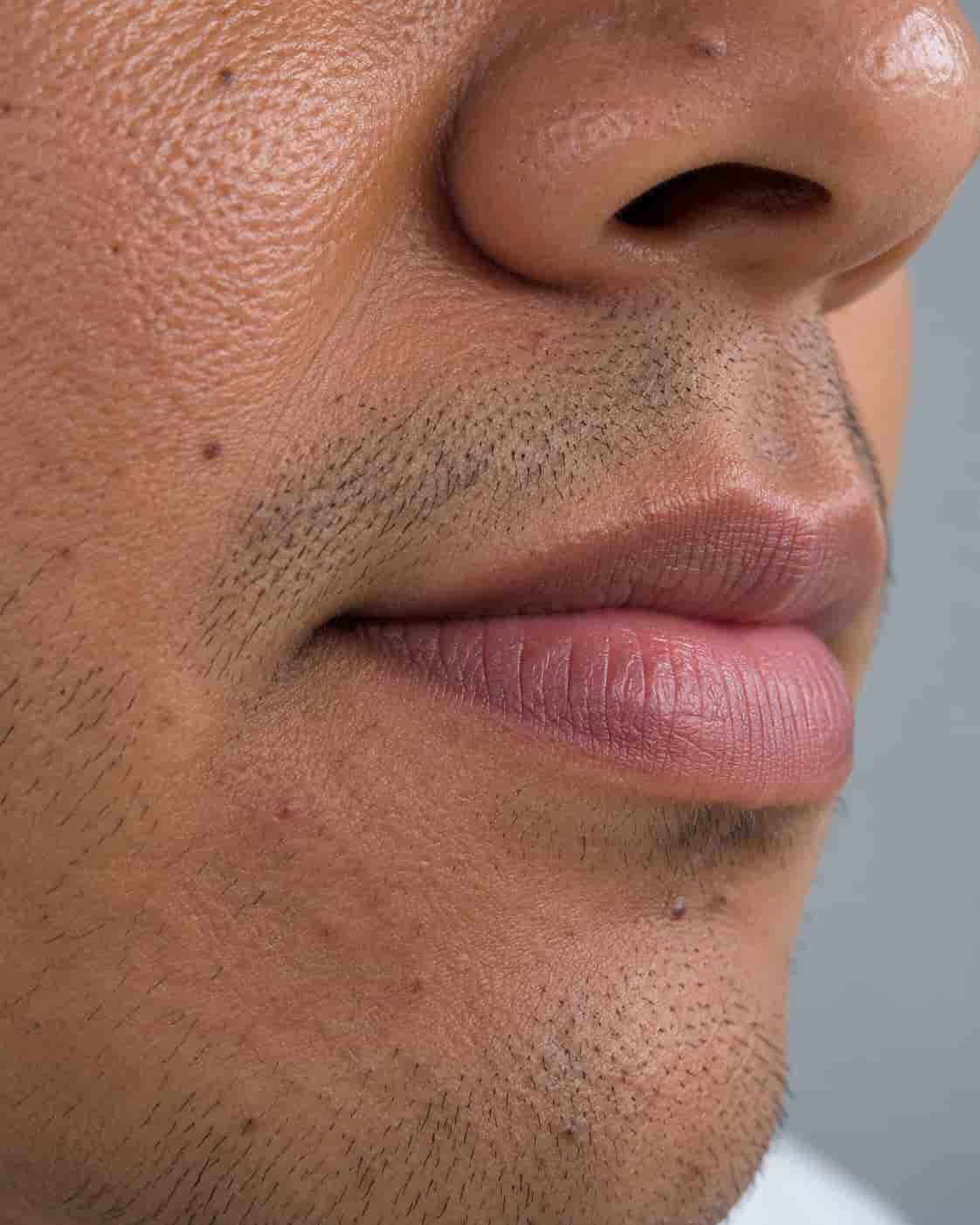
Generate an ultra-high-resolution 8K extreme macro photograph using the attached reference photograph as the STRICT identity reference.
The subject MUST be the exact same adult man shown in the supplied reference photograph and the same subject represented in the previous macro photographs.
Maintain his identity precisely. Preserve his real medium-brown skin tone, facial proportions, nose shape, mouth shape, natural lips, jaw structure, facial-hair pattern and all recognizable physical characteristics.
Do not beautify him, reinterpret his features, change his ethnicity, feminize him, age or de-age him, or replace him with a generic male model.
CAMERA ANGLE AND COMPOSITION:
Capture an extreme macro photograph of the LOWER RIGHT SIDE of his face from a gentle three-quarter RIGHT-side angle.
The camera should be positioned slightly below nose level and approximately 30–40 degrees toward the right side of his face rather than directly in front of him.
This must clearly feel like a different camera angle from the previous eye-and-cheek macro photograph.
Use an extremely tight crop beginning just beneath the right side of the nose and ending slightly below the chin.
The composition should primarily reveal:
— the right nostril and lower portion of his nose
— the philtrum
— his natural upper lip
— his lower lip
— the right corner of his mouth
— natural facial hairs above and beside the lips
— the chin
— a small portion of the right jaw
Do NOT show the entire face.
His mouth is relaxed and gently closed.
Do NOT make him smile and do not show his teeth.
IDENTITY CONSISTENCY:
Preserve the authentic nose and lip anatomy visible in the supplied photograph.
His lips must retain their real proportions and natural shape.
Do not enlarge the lips.
Do not create perfectly symmetrical lips.
Do not narrow or reshape his nose.
Do not create fashion-model facial proportions.
FACIAL HAIR:
Preserve his natural male facial-hair characteristics.
Show extremely fine and realistic individual hairs around:
— the upper lip
— corners of the mouth
— lower lip
— chin
— lower cheek
Facial hair must emerge naturally from individual follicles.
Include a combination of very short dark stubble, finer hairs and peach fuzz rather than creating a perfectly uniform beard.
Do not create a heavy beard if it is not present in the reference photograph.
LIP MICRO-DETAIL:
Render his lips with authentic photographic detail.
Show:
fine vertical lip lines,
tiny natural folds,
slight asymmetry,
subtle dryness,
minute irregularities,
natural pigmentation variation,
and a delicate trace of moisture where the lips meet.
The lips should have their natural muted brownish-pink coloration appropriate to his complexion.
No lipstick.
No artificial saturation.
No cosmetic gloss.
SKIN MICRO-DETAIL:
Reveal uncompromisingly realistic human skin.
Preserve:
thousands of visible pores,
sebaceous filaments around the nose,
fine vellus hairs,
individual facial hairs,
peach fuzz,
tiny pigmentation marks,
subtle tonal variations,
natural oil,
minute blemishes,
minor redness,
tiny skin creases,
and realistic differences in skin texture.
The skin around the nose should naturally show slightly more visible pores and sebaceous texture.
The chin should have its own distinct texture, including hair follicles, tiny hairs and slight irregularities.
Do NOT make every part of the skin equally textured.
Some areas should appear smoother and others rougher, exactly as real human skin behaves under macro photography.
LIGHTING:
Use one very large diffused daylight source positioned slightly CAMERA-LEFT and above the subject.
The light should travel gently across the face from left to right, creating subtle dimensionality across the nose, lips and chin.
Individual facial hairs and peach fuzz should catch tiny highlights.
Maintain neutral, realistic skin color.
No dramatic shadows.
No glamour lighting.
No cinematic lighting.
CAMERA:
Professional full-frame camera
100mm true macro lens
f/8
ISO 100
1/160 sec
high-resolution RAW photographic appearance
Focus precisely on the lips and surrounding skin.
The nose closest to the lens may have a very subtle natural depth-of-field falloff while the central lips remain critically sharp.
The depth of field must look optically realistic rather than artificially blurred.
BACKGROUND:
Almost no background should be visible because of the extreme crop.
Any visible background must be neutral pale grey and naturally out of focus.
CRITICAL REALISM:
The result must resemble a genuine professional dermatological or scientific macro photograph of the real subject.
Preserve authentic:
pores,
sebaceous filaments,
facial follicles,
short stubble,
peach fuzz,
lip creases,
minor dryness,
pigmentation differences,
tiny blemishes,
natural oil,
skin irregularities,
and genuine facial asymmetry.
Do NOT invent excessive acne, scars, wrinkles or skin damage merely to make the photograph appear detailed.
Natural realism is more important than exaggerated texture.
ABSOLUTELY NO:
beauty retouching,
skin smoothing,
pore removal,
fake pores,
plastic skin,
waxy skin,
CGI appearance,
artificial HDR,
oversharpening,
symmetry correction,
beauty filters,
glowing skin,
lip enhancement,
lip filler appearance,
perfectly uniform beard,
commercial skincare retouching,
or cinematic color grading.
The photograph should look as though a professional photographer placed a real 100mm macro lens only centimeters from the subject’s face and captured the natural skin exactly as it exists.
Portrait 4:5 composition.
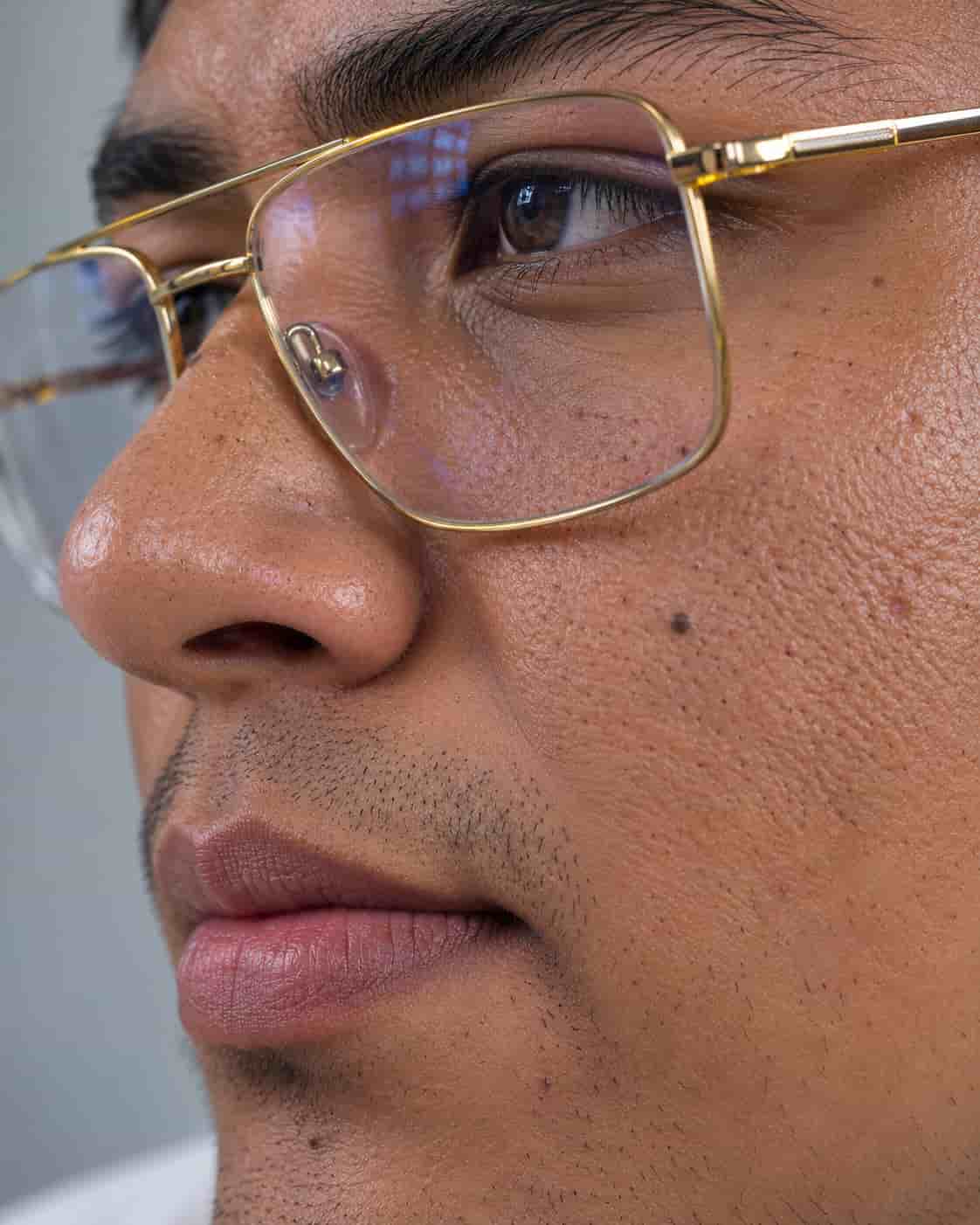
Generate an ultra-high-resolution 8K photorealistic macro portrait using the attached reference photograph as the STRICT identity reference.
The subject MUST be the exact same adult man shown in the supplied reference photograph and in the previous generated macro photographs.
Preserve his identity precisely: natural medium-brown skin tone, authentic facial proportions, nose shape, lips, jawline, cheek structure, dark-brown eyes, naturally shaped eyebrows, short straight black hair, hairline, facial-hair pattern and recognizable physical characteristics.
He MUST continue wearing the same thin gold-framed eyeglasses visible in the reference photograph.
Do not beautify, reinterpret, feminize, age, de-age, reshape, or replace him with a generic male model.
CAMERA ANGLE AND POSE:
Create a dramatically different pose from the previous photographs.
Photograph him from his LEFT SIDE in a near-profile view, approximately 65–75 degrees away from the camera.
Position the camera slightly BELOW eye level.
His head is gently tilted upward by approximately 10–15 degrees, as though he is calmly looking toward something slightly above and beyond the camera.
His eyes are looking upward and forward rather than directly into the lens.
His expression is neutral, relaxed and confident.
His mouth is naturally closed.
Do NOT make him smile.
Do NOT show teeth.
The pose must feel spontaneous and photographic rather than like a fashion-model pose.
COMPOSITION:
Use an intimate macro portrait crop.
The frame should begin around the upper eyebrow / forehead area and continue down past the chin.
Emphasize:
— the side profile of his nose
— one eye visible behind his glasses
— eyebrow
— upper cheek
— cheekbone
— lips in profile
— chin
— jawline
— natural facial hair
— part of the temple
Do NOT center the face perfectly.
Position his visible eye approximately around the upper third of the frame.
Allow the nose and lips to project naturally into negative space.
EYEGLASSES:
Preserve the thin gold-colored metal eyeglass frames from the reference photograph.
Render them as real physical objects with:
fine metallic reflections,
transparent lenses,
realistic nose pads,
hinges,
tiny surface imperfections,
subtle reflections from the large window,
and physically accurate refraction.
The glasses must NOT obscure the eye completely.
Avoid excessive blue or purple reflections on the lenses.
The eye must remain clearly visible through the glass.
SKIN REALISM:
Render uncompromisingly realistic human skin.
Preserve:
visible pores,
natural pore-size variation,
sebaceous filaments,
peach fuzz,
fine facial hairs,
short irregular stubble,
individual hair follicles,
tiny pigmentation marks,
minor blemishes,
subtle uneven coloration,
natural oil,
slight redness,
minute creases,
and authentic skin texture.
Do NOT exaggerate imperfections.
The skin must look like the subject’s actual untreated skin photographed extremely close, not artificially damaged or aged.
FACIAL HAIR:
Preserve the natural facial-hair pattern visible in the reference.
Show individual short hairs around the:
upper lip,
chin,
jaw,
lower cheek,
and sideburn.
Facial hairs should vary naturally in length, direction and density.
Do not create a full beard.
PROFILE DETAIL:
Preserve his authentic nose anatomy.
Do NOT straighten, narrow or reshape his nose.
Preserve the real shape and proportions of his lips.
Show natural vertical lip lines, minor dryness and subtle pigmentation differences.
The jaw and chin must retain believable asymmetry and natural anatomy.
LIGHTING:
Illuminate him using soft diffused daylight from a very large window positioned ABOVE and slightly CAMERA-RIGHT.
Because his head is slightly elevated, allow the light to skim gently across:
the forehead,
bridge of the nose,
upper cheek,
lips,
and chin.
Create extremely subtle dimensional shadows beneath the nose, lower lip and jaw.
No dramatic lighting.
No beauty lighting.
No cinematic rim light.
Maintain neutral and accurate skin color.
CAMERA:
Professional full-frame camera
100mm macro lens
f/8
ISO 100
1/160 sec
high-resolution RAW photographic appearance
Focus critically on the visible eye and adjacent cheek.
Allow physically realistic depth falloff toward the nose tip and far side of the face.
Do NOT simulate artificial smartphone portrait blur.
BACKGROUND:
Neutral pale-grey seamless photographic backdrop.
Completely unobtrusive.
Natural optical blur caused only by the macro lens and subject distance.
CRITICAL IDENTITY CONSISTENCY:
The attached photograph is the authoritative identity reference.
The generated subject must remain unmistakably the exact same man.
Preserve his:
eye shape,
nose,
lips,
skin tone,
eyebrows,
glasses,
hair,
facial proportions,
jaw,
and age.
Do NOT transform him into a more conventionally attractive model.
Identity accuracy is more important than idealized aesthetics.
CRITICAL PHOTOGRAPHIC REALISM:
The final photograph should look like an actual 8K RAW photograph captured during a professional high-resolution camera and lens test.
Preserve:
real pores,
realistic skin oil,
peach fuzz,
stubble,
minor blemishes,
tiny hairs,
lip texture,
eyeglass reflections,
natural asymmetry,
and subtle pigmentation variation.
ABSOLUTELY NO:
beauty retouching,
skin smoothing,
pore removal,
fake pores,
plastic skin,
waxy appearance,
CGI,
AI-looking skin,
HDR halos,
oversharpening,
perfect symmetry,
face reshaping,
beauty filters,
glowing skin,
perfect beard,
artificially perfect lips,
fashion-editorial retouching,
or cinematic color grading.
The photograph must feel like a real person physically standing in front of a professional macro camera.
Portrait 4:5 composition.
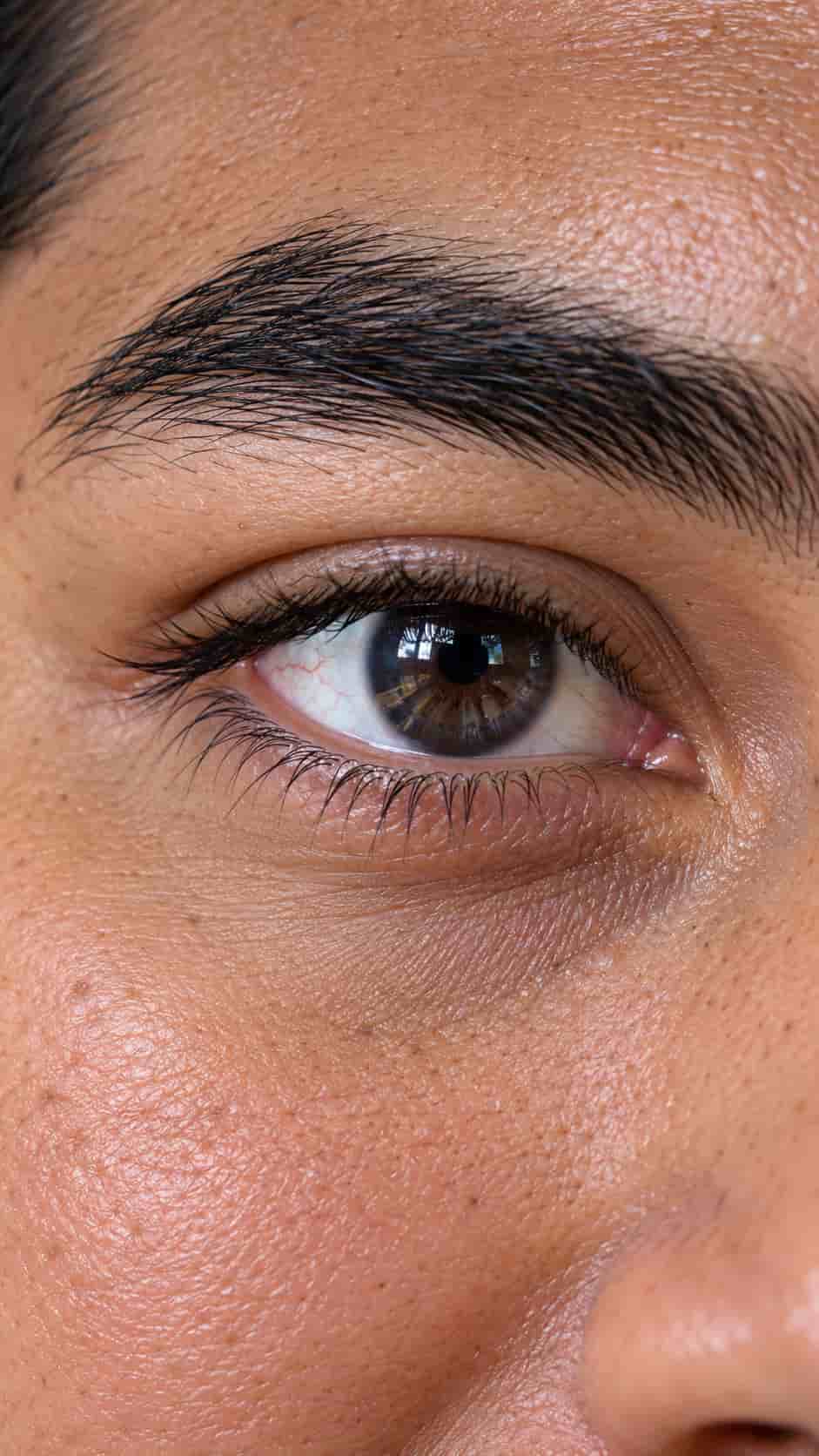
Using the attached photograph as the STRICT identity and anatomical reference, generate an ultra-high-resolution 8K extreme macro photograph of ONE EYE of the EXACT SAME PERSON shown in the reference image.
The uploaded photograph is the authoritative reference for identity.
The generated result MUST preserve the person’s real identity and natural physical characteristics with maximum accuracy.
Do NOT create a generic person.
Do NOT replace the subject.
Do NOT beautify or reinterpret their facial features.
==================================================
IDENTITY PRESERVATION
==================================================
Strictly preserve all visible identity characteristics from the uploaded photograph, especially:
— natural eye shape
— actual apparent iris color
— pupil proportions
— eyelid anatomy
— eyebrow shape
— eyebrow density
— eyebrow hair direction
— natural skin tone
— skin pigmentation
— facial proportions
— natural asymmetry
— age-appropriate skin characteristics
— hair color where visible
— distinctive marks that are clearly supported by the reference
Do NOT change the person’s ethnicity, age, gender presentation or recognizable facial characteristics.
If any requested photographic enhancement conflicts with identity accuracy, ALWAYS prioritize identity accuracy.
==================================================
COMPOSITION — EXTREME EYE MACRO
==================================================
Create an EXTREME MACRO photograph of ONE EYE.
Use the eye that can be reproduced most faithfully from the uploaded reference photograph.
The eye and surrounding skin should occupy essentially the entire frame.
This is NOT a normal portrait.
This is NOT a close-up of the whole face.
The composition should include primarily:
— one complete eye
— upper eyelid
— lower eyelid
— tear duct
— eyelashes
— eyebrow
— skin immediately surrounding the eye
— a small portion of the upper cheek
— a small portion of the bridge or side of the nose if naturally included
Do NOT show the entire face.
Do NOT show both eyes prominently.
The iris should become one of the strongest visual focal points.
Position the camera almost perpendicular to the eye, with only a very subtle natural three-quarter perspective.
The result should feel as though a professional macro lens were positioned only centimeters from the person’s face.
==================================================
IMPORTANT — REMOVE VISUAL OBSTRUCTIONS
==================================================
If the person wears glasses in the reference photograph, REMOVE the glasses for this macro photograph so that the eye, eyelashes, eyelids and surrounding skin can be examined clearly.
However, removing the glasses MUST NOT alter the person’s identity, eye shape, eyebrow anatomy, nose anatomy or facial proportions.
Do not invent exaggerated eyelashes, makeup or features that were previously hidden.
Reconstruct only anatomically plausible details consistent with the visible reference.
==================================================
EYE DETAIL
==================================================
Render the eye with authentic high-resolution macro-photography detail.
Preserve the person’s natural apparent iris color from the reference photograph.
Show:
— complex radial iris fibers
— crypts and natural iris structures
— subtle variations in iris pigmentation
— a naturally defined limbal boundary
— realistic pupil
— moist corneal surface
— subtle reflections across the cornea
— natural sclera coloration
— extremely subtle capillaries in the sclera
— realistic tear-line moisture
— natural inner tear duct
— fine eyelid margins
— individual upper eyelashes
— individual lower eyelashes
The iris MUST NOT look like a CGI texture or digital pattern.
The sclera must NOT be perfectly pure white.
Include extremely subtle natural variations in the sclera.
Do NOT artificially increase eye saturation.
Do NOT change brown eyes to hazel, blue or green.
Do NOT change light eyes to another color.
The reference photograph determines eye color.
==================================================
REALISTIC CORNEAL REFLECTION
==================================================
Create a subtle, physically believable reflection of a large diffused window or photographic softbox in the cornea.
The reflection should follow the curvature of the eye.
It must NOT cover the entire iris.
It should look like a genuine reflection produced during a professional macro photography session.
No artificial glowing eye.
No fantasy reflections.
No ring-light circles unless naturally appropriate.
==================================================
EYELASHES
==================================================
Preserve natural eyelashes.
Show individual eyelashes with:
— different lengths
— slightly different directions
— irregular spacing
— natural curvature
— realistic thickness
— occasional crossing hairs
Do NOT create perfectly separated cosmetic eyelashes.
Do NOT automatically make eyelashes longer, darker or denser.
Do NOT add mascara unless it is clearly supported by the uploaded reference.
==================================================
EYEBROW
==================================================
Include part or most of the eyebrow near the upper edge of the composition.
Preserve the person’s actual eyebrow characteristics.
Show individual eyebrow hairs with:
— natural density
— irregular spacing
— different growth directions
— subtle thickness variations
— visible skin between hairs
Do NOT create a perfectly sculpted eyebrow.
Do NOT artificially fill sparse areas.
==================================================
SKIN MICRO-DETAIL
==================================================
This is critical.
Render completely natural, unretouched human skin around the eye.
Reveal:
— visible pores
— natural pore-size variation
— peach fuzz
— extremely fine vellus hairs
— tiny facial hairs
— individual hair follicles
— sebaceous texture
— subtle pigmentation differences
— tiny natural blemishes where appropriate
— minute skin creases
— realistic under-eye texture
— mild natural redness
— subtle variations in skin thickness
— natural skin oil
— tiny dry areas where anatomically plausible
— genuine facial asymmetry
The skin must NOT have uniform texture.
Different regions should behave differently.
The skin directly beneath the eye should appear naturally thinner and finer.
The cheek may show slightly more visible pores.
The area beside the nose may show slightly more sebaceous texture.
Do NOT artificially add excessive freckles, acne, scars, wrinkles, dark spots or skin damage simply to make the photograph appear detailed.
Natural realism is more important than exaggerated imperfection.
==================================================
MICROSCOPIC PHOTOGRAPHIC REALISM
==================================================
At close inspection, the viewer should be able to distinguish:
individual eyebrow hairs,
individual eyelashes,
fine peach-fuzz hairs,
tiny skin folds,
pores of different sizes,
subtle oil reflections,
iris fibers,
tear-line moisture,
and extremely subtle scleral capillaries.
However, everything must remain optically believable.
Do NOT create fake procedural skin texture.
Do NOT repeat pore patterns.
Do NOT uniformly sharpen every pore.
==================================================
LIGHTING
==================================================
Use extremely soft, diffused neutral daylight from a very large window positioned approximately 45 degrees to one side of the camera.
Allow the light to skim gently across the skin.
This should reveal pores, fine hairs and eyelid texture without creating harsh shadows.
Maintain accurate and neutral skin color.
No dramatic lighting.
No beauty lighting.
No cinematic orange-and-teal grading.
No artificial glow.
==================================================
CAMERA
==================================================
Professional high-resolution full-frame camera
100mm true macro lens
1:1 macro reproduction appearance
f/11
ISO 100
1/160 sec
high-resolution RAW photographic appearance
extremely high resolving power
Focus critically on the iris, eyelashes and central eyelid area.
The central eye region should be exceptionally sharp.
Allow a very subtle and physically realistic depth-of-field falloff toward the extreme edges of the skin.
Do NOT use artificial smartphone portrait blur.
Do NOT blur the iris.
==================================================
CRITICAL IDENTITY CONSISTENCY
==================================================
The attached photograph is the STRICT identity reference.
The generated eye must genuinely look as though it belongs to the SAME PERSON shown in the uploaded photograph.
Preserve:
eye anatomy,
iris color,
eyebrow,
skin tone,
age characteristics,
facial anatomy,
and natural asymmetry.
Do NOT use the uploaded photograph merely as inspiration.
The goal is to simulate what would happen if the SAME PERSON physically sat in front of a professional macro camera and the photographer moved extremely close to photograph their eye.
==================================================
ABSOLUTELY NO
==================================================
different person,
generic model,
identity replacement,
eye recoloring,
eye enlargement,
beauty retouching,
skin smoothing,
pore removal,
fake pores,
plastic skin,
waxy skin,
CGI skin,
3D-render appearance,
AI-looking iris,
perfectly white sclera,
fake eyelashes,
automatic mascara,
artificial freckles,
excessive acne,
symmetry correction,
glowing skin,
HDR halos,
oversharpening,
commercial skincare retouching,
fashion-beauty retouching,
or excessive cinematic color grading.
==================================================
FINAL GOAL
==================================================
The final image should look like an authentic extreme macro photograph of the SAME REAL PERSON from the uploaded reference image, captured during a professional dermatology, ophthalmic-detail or high-end camera/lens test.
The viewer should believe that a real 100mm macro lens was positioned only centimeters from the person’s eye.
It must feel photographic, imperfect, organic and physically real — never AI-generated.
Ultra-high-resolution 8K photographic appearance.
VERTICAL 9:16 composition.
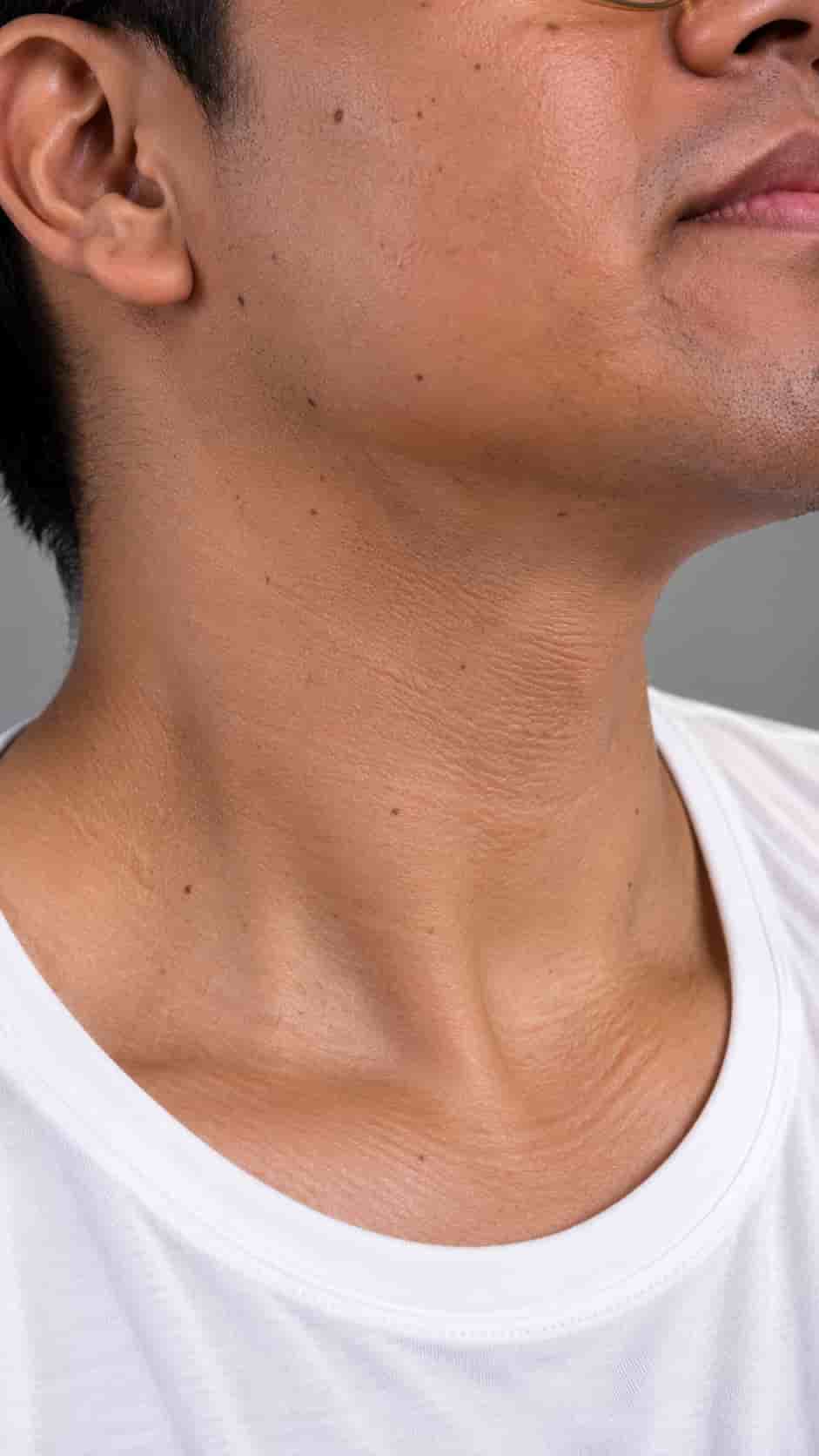
Using the attached photograph as the STRICT identity and anatomical reference, generate an ultra-high-resolution 8K extreme macro photograph of the NECK, JAWLINE AND COLLARBONE of the EXACT SAME PERSON shown in the uploaded reference image.
The uploaded photograph is the authoritative reference for the person’s identity, skin tone, age characteristics, hair, anatomy and visible physical features.
The result MUST look like the same real person photographed from a new, extremely close camera position.
Do NOT generate a generic model.
Do NOT beautify or reinterpret the subject.
Do NOT change age, ethnicity, gender presentation, body proportions or recognizable physical characteristics.
==================================================
IDENTITY AND ANATOMICAL PRESERVATION
==================================================
Strictly preserve all characteristics that can reasonably be derived from the uploaded reference photograph, including:
— natural skin tone
— pigmentation
— jaw shape
— chin proportions
— neck proportions
— visible hair color
— facial-hair characteristics, if present
— natural asymmetry
— age-appropriate skin characteristics
— distinctive marks clearly supported by the reference
Do NOT invent identity-defining features that are not supported by the reference.
If photographic enhancement conflicts with identity accuracy, ALWAYS prioritize identity accuracy.
==================================================
POSE
==================================================
Create a completely new photographic pose designed specifically to expose the side of the neck.
The subject gently raises the chin and turns the head approximately 35–45 degrees AWAY from the camera.
The chin should point slightly upward.
This should naturally stretch the visible side of the neck without creating an exaggerated pose.
The shoulders remain relaxed.
The pose should reveal the anatomical transition between:
— underside of the jaw
— jawline
— side of the neck
— front of the neck
— base of the neck
— clavicle
— upper shoulder
The pose must feel like a real person being photographed during a professional macro skin-detail session.
==================================================
COMPOSITION
==================================================
Create an EXTREME MACRO / DETAIL photograph.
The NECK should be the dominant subject of the image.
Frame primarily:
— a small portion of the underside of the chin
— lower edge of the jaw
— side of the neck
— central neck anatomy
— base of the neck
— one or both clavicle contours
— a small portion of the upper shoulder
The face should be almost completely outside the frame.
At most, allow a tiny portion of the lower jaw or chin to appear near the upper edge.
Do NOT show the eyes.
Do NOT show the entire face.
Do NOT turn this into a conventional portrait.
The composition should feel deliberately cropped, intimate and extremely close, similar to a professional dermatological macro photograph.
==================================================
CAMERA ANGLE
==================================================
Position the camera approximately level with the middle of the neck.
Photograph from a subtle three-quarter SIDE angle rather than directly from the front.
The camera should be physically close to the subject.
The neck should run diagonally or vertically through the composition, creating natural depth between the jaw, neck and clavicle.
Avoid perfect symmetry.
The image should feel like the photographer physically moved beside the subject and photographed the neck from only a short distance away.
==================================================
NECK ANATOMY
==================================================
Render anatomically believable neck structure.
Preserve natural transitions between:
jaw,
submental area,
sternocleidomastoid region,
front of the neck,
base of the neck,
clavicle,
and shoulder.
Depending on the person’s anatomy and pose, subtle tendons and muscle contours may become visible.
They must remain natural.
Do NOT exaggerate tendons.
Do NOT create bodybuilding-style neck muscles.
Do NOT artificially sharpen anatomical structures.
The clavicle should have realistic prominence based on the subject’s natural body proportions.
==================================================
SKIN MICRO-DETAIL
==================================================
This is CRITICAL.
Render completely natural, untreated human skin.
Reveal authentic macro-level detail including:
— visible pores
— natural pore-size variation
— fine vellus hairs
— peach fuzz
— tiny individual hairs
— hair follicles
— subtle pigmentation differences
— minute skin creases
— extremely fine horizontal neck lines
— natural skin folds caused by the pose
— tiny blemishes where appropriate
— subtle redness
— mild tonal variation
— natural oil
— subtle dryness
— tiny pigmentation marks where naturally appropriate
— realistic differences in skin thickness
— genuine human asymmetry
The neck MUST NOT have perfectly uniform skin.
Different areas should display different levels of texture.
Some areas may appear naturally smoother.
Other regions should reveal slightly more visible pores, follicles or fine creases.
==================================================
IMPORTANT — DO NOT INVENT IMPERFECTIONS
==================================================
Do NOT artificially add:
excessive freckles,
large moles,
acne,
scars,
wrinkles,
sun damage,
dark spots,
skin lesions,
or other distinctive marks
unless they are clearly supported by the uploaded reference photograph.
When details are not visible in the source photograph, reconstruct only subtle, generic and anatomically plausible human micro-texture.
Natural realism is more important than exaggerated imperfection.
==================================================
FINE HAIRS
==================================================
Render individual fine hairs naturally where appropriate.
Depending on the subject, show subtle:
— peach fuzz along the jaw
— tiny neck hairs
— fine hairs near the hairline
— facial-hair follicles near the underside of the jaw
— occasional irregular individual hairs
Hair density, color and thickness should remain consistent with the person in the reference photograph.
Do NOT automatically add beard stubble.
Do NOT remove naturally visible facial hair.
==================================================
JAWLINE
==================================================
Preserve the person’s natural jaw anatomy.
Do NOT artificially sharpen the jawline.
Do NOT create an exaggerated model-like jaw.
Do NOT remove natural softness beneath the chin.
Do NOT reshape the chin.
The jawline should appear exactly as a real jaw would from this new photographic angle.
==================================================
CLAVICLE AND SHOULDER
==================================================
Allow the photograph to extend downward toward the clavicle and upper shoulder.
Render realistic:
— clavicle contour
— subtle shadows around the collarbone
— natural skin tension
— tiny hairs
— pores
— pigmentation variation
— subtle skin folds
Do NOT exaggerate collarbone definition.
Do NOT alter the person’s body proportions.
==================================================
CLOTHING
==================================================
Keep clothing almost completely outside the macro composition.
If clothing appears near the bottom or side edge, preserve the general clothing characteristics visible in the reference photograph.
Do NOT introduce revealing clothing solely for the image.
The focus must remain on the naturally visible neck and clavicle area.
==================================================
LIGHTING
==================================================
Use extremely soft, diffused neutral daylight from a very large window positioned approximately 45 degrees to CAMERA-LEFT.
Allow the light to travel gently across the neck from one side to the other.
The grazing light should subtly reveal:
pores,
fine hairs,
tiny creases,
neck contours,
jaw structure,
and clavicle anatomy.
Create gentle physically realistic shadows underneath the jaw and around the clavicle.
Maintain accurate and neutral skin color.
No dramatic lighting.
No hard flash.
No glamour lighting.
No artificial rim light.
No orange-and-teal grading.
==================================================
CAMERA
==================================================
Professional high-resolution full-frame camera
100mm true macro lens
approximately 1:1 macro reproduction appearance
f/8
ISO 100
1/160 sec
high-resolution RAW photographic appearance
extremely high resolving power
Focus critically on the central side of the neck.
The central neck texture should appear exceptionally detailed.
Allow subtle, physically realistic optical focus falloff toward the jaw and far shoulder.
Do NOT use artificial smartphone portrait blur.
==================================================
BACKGROUND
==================================================
Use a simple neutral pale-grey seamless photographic background.
Only a small amount of background should be visible because of the extremely tight crop.
The background should fall naturally out of focus due to the macro lens and subject distance.
No objects.
No text.
No scenery.
No artificial digital blur.
==================================================
CRITICAL PHOTOGRAPHIC REALISM
==================================================
At close inspection, the viewer should be able to distinguish:
individual fine hairs,
different pore sizes,
tiny skin folds,
subtle neck lines,
hair follicles,
minute pigmentation differences,
natural oil reflections,
clavicle contours,
and realistic transitions between jaw and neck.
However, all detail MUST remain optically believable.
Do NOT create procedural skin texture.
Do NOT repeat pore patterns.
Do NOT sharpen every pore equally.
Do NOT create artificial micro-detail merely to simulate 8K.
==================================================
CRITICAL IDENTITY CONSISTENCY
==================================================
The attached photograph is the STRICT reference for the person.
The goal is NOT to create a new person.
The goal is to simulate what would happen if the EXACT SAME PERSON from the uploaded photograph:
raised their chin,
turned their head,
and allowed a professional photographer to move extremely close and photograph the side of their neck, jaw and clavicle with a real macro lens.
The resulting anatomy, skin tone and visible characteristics must remain consistent with the uploaded person.
==================================================
ABSOLUTELY NO
==================================================
different person,
generic model,
identity replacement,
body reshaping,
neck elongation,
artificially sharp jawline,
exaggerated collarbones,
beauty retouching,
skin smoothing,
pore removal,
fake pores,
plastic skin,
waxy skin,
CGI skin,
3D-render appearance,
fake freckles,
invented moles,
excessive acne,
exaggerated wrinkles,
fake scars,
procedural skin texture,
perfect symmetry,
glowing skin,
HDR halos,
oversharpening,
commercial skincare retouching,
or excessive cinematic color grading.
==================================================
FINAL GOAL
==================================================
The final result should look like an authentic extreme macro photograph of the SAME REAL PERSON from the uploaded reference photograph.
It should resemble a professional dermatological, skin-texture or high-end camera/lens test photograph.
The viewer should believe the person physically raised their chin and turned their head while a photographer positioned a real 100mm macro lens close to the side of their neck.
It must look organic, anatomically accurate, imperfect and genuinely photographic — never AI-generated.
Ultra-high-resolution 8K photographic appearance.
VERTICAL 9:16 composition.
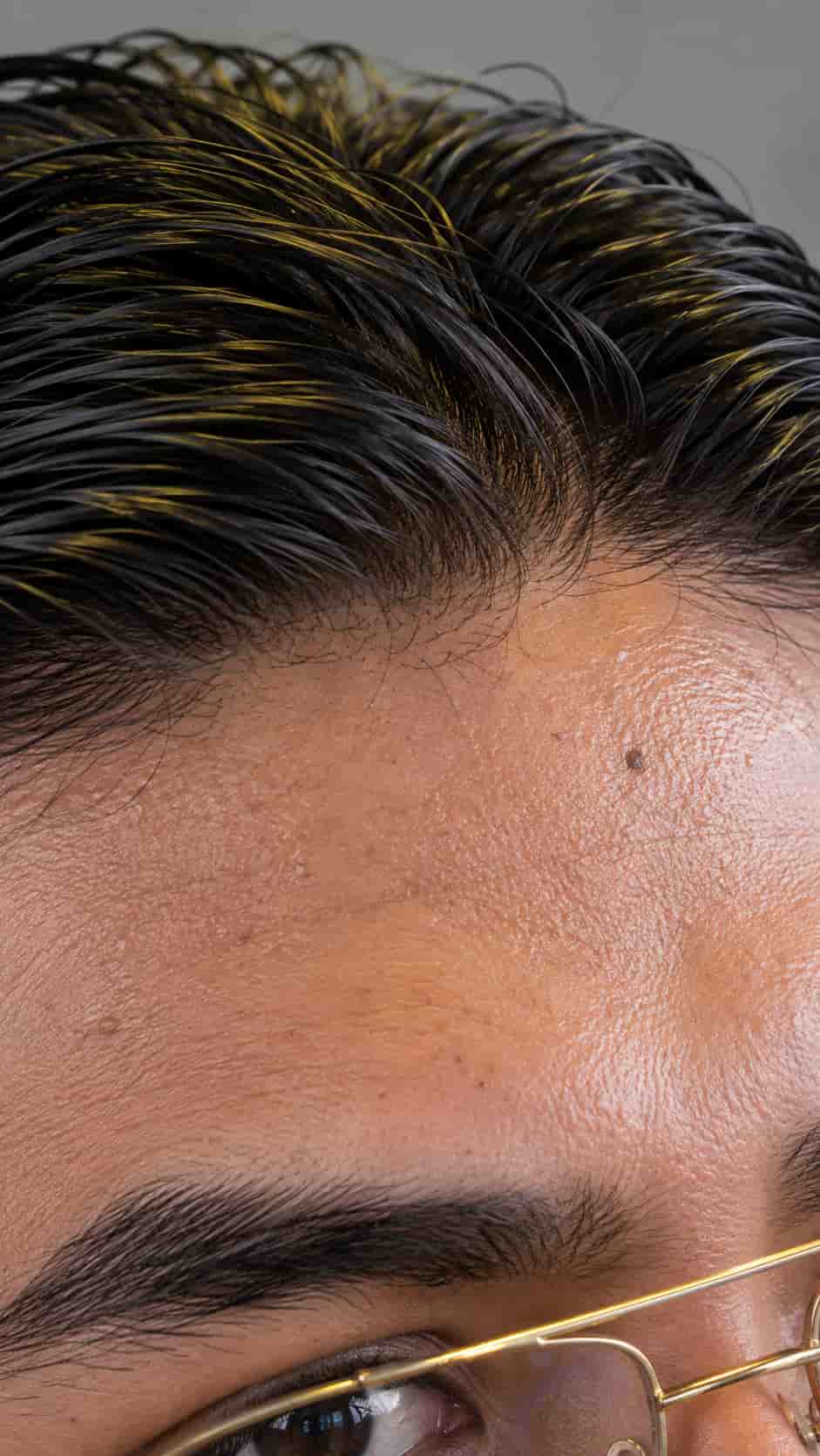
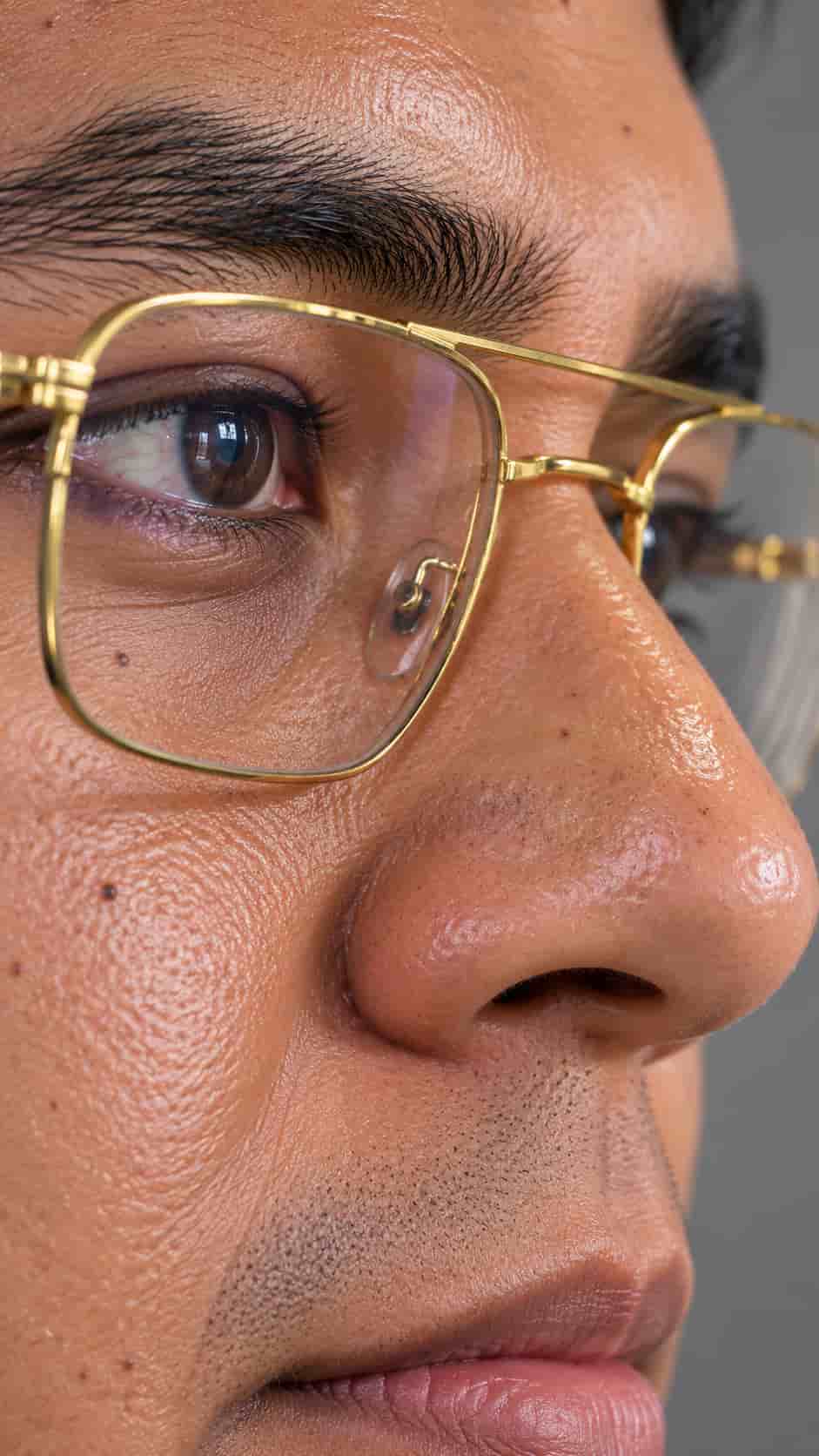
Using the attached photograph as the STRICT identity and anatomical reference, generate an ultra-high-resolution 8K EXTREME MACRO photograph of the NOSE, UPPER CHEEK AND PARTIAL EYE AREA of the EXACT SAME PERSON shown in the uploaded reference image.
The uploaded photograph is the authoritative reference for the person’s identity, skin tone, age characteristics, nose anatomy, eye shape, eyebrows, facial proportions and all recognizable physical characteristics.
The generated subject MUST remain unmistakably the exact same person.
Do NOT create a generic model.
Do NOT replace or reinterpret the person’s identity.
Do NOT beautify the face.
Do NOT change age, ethnicity, gender presentation or recognizable facial anatomy.
==================================================
COMPOSITION
==================================================
Create an EXTREMELY TIGHT photographic macro crop from a three-quarter SIDE PROFILE angle.
The NOSE should be the dominant anatomical feature of the photograph.
The composition should reveal:
— the bridge of the nose
— sidewall of the nose
— natural nose tip
— one nostril
— transition between nose and cheek
— upper cheek
— inner cheek beside the nose
— a substantial portion of one eye
— only a partial glimpse of the second eye if naturally visible
— a small portion of the eyebrow
— optionally, only a tiny edge of the upper lip near the bottom of the frame
Do NOT show the entire face.
Do NOT show the full mouth.
Do NOT show the chin.
Do NOT create a conventional portrait.
The crop should feel intentionally extreme, as though the camera were positioned only centimeters from the person’s face.
==================================================
CAMERA ANGLE
==================================================
Position the camera approximately 55–70 degrees toward one side of the person’s face.
Use a genuine THREE-QUARTER / NEAR-PROFILE macro perspective.
The nose should project naturally toward the camera-facing side of the composition.
The camera should be approximately at eye level or very slightly below eye level.
The perspective MUST clearly reveal the three-dimensional anatomy of:
— nose bridge
— nose tip
— nostril
— cheek
— eye socket
The image should NOT look like a frontal photograph that has simply been cropped.
It should look as though the photographer physically moved beside the person and placed a professional macro lens extremely close to their face.
==================================================
IDENTITY PRESERVATION
==================================================
Preserve exactly the person’s authentic:
— nose length
— nose width
— bridge shape
— nose-tip shape
— nostril anatomy
— cheek structure
— eye shape
— apparent eye color
— eyebrow characteristics
— skin tone
— facial proportions
— natural asymmetry
— distinctive visible characteristics
Do NOT narrow the nose.
Do NOT straighten the nose.
Do NOT lift or reshape the nose tip.
Do NOT reduce nostril size.
Do NOT create a fashion-model nose.
Do NOT enlarge the eyes.
Do NOT reshape the cheekbones.
Identity accuracy is more important than conventional beauty.
==================================================
NOSE MICRO-DETAIL
==================================================
Render the nose with uncompromising photographic realism.
Show natural:
— visible pores
— different pore sizes
— sebaceous filaments
— tiny vellus hairs
— peach fuzz
— natural skin oil
— subtle pigmentation variation
— minute skin creases
— mild redness where naturally appropriate
— tiny surface irregularities
— realistic transition between thicker and thinner skin
Pores around the sides and lower portion of the nose may naturally appear slightly more visible than pores on surrounding areas.
Sebaceous filaments should appear subtle and anatomically plausible.
Do NOT turn them into exaggerated blackheads.
The nose tip may naturally reflect slightly more light because of normal skin oil, but it should NEVER appear artificially glossy.
==================================================
CHEEK MICRO-DETAIL
==================================================
The adjacent cheek should reveal extremely realistic human skin.
Preserve:
— visible pores
— natural variation in pore size
— peach fuzz
— fine facial hairs
— hair follicles
— subtle pigmentation differences
— minor blemishes where appropriate
— tiny natural marks supported by the reference
— mild redness
— natural oil
— fine skin creases
— realistic tonal variation
The skin must NOT have uniform texture.
The inner cheek beside the nose may show slightly larger pores.
Areas farther toward the outer cheek may appear naturally smoother.
Individual peach-fuzz hairs should become visible when they catch the side lighting.
==================================================
IMPORTANT — DO NOT INVENT IMPERFECTIONS
==================================================
Do NOT artificially add:
excessive freckles,
large moles,
acne,
scars,
deep wrinkles,
sun damage,
blackheads,
skin lesions,
large pigmentation marks,
or other distinctive imperfections
unless they are clearly supported by the uploaded photograph.
If the reference image does not contain enough resolution to reveal microscopic details, reconstruct ONLY subtle, anatomically plausible human skin micro-texture consistent with the visible complexion.
Natural realism is more important than exaggerated texture.
==================================================
EYE DETAIL
==================================================
One eye should remain partially or substantially visible near the upper portion of the composition.
Preserve its authentic:
— shape
— proportions
— apparent iris color
— eyelid anatomy
— eyelashes
— eyebrow relationship
Render realistic macro details including:
— natural iris structure
— pupil
— subtle color variation within the iris
— realistic sclera
— tiny scleral blood vessels
— natural tear-line moisture
— individual eyelashes
— eyelid texture
— fine skin creases
— physically believable catchlight
Do NOT make the sclera perfectly white.
Do NOT exaggerate iris saturation.
Do NOT enlarge the pupil or iris.
Do NOT create unnaturally long or perfect eyelashes.
The eye should look like a real human eye photographed at extremely high resolution.
==================================================
EYEBROW
==================================================
If part of the eyebrow appears, preserve its natural shape and density.
Show individually resolved hairs with:
— different thicknesses
— different growth directions
— natural spacing
— occasional overlapping hairs
— subtle irregularity
Do NOT create a perfectly groomed or symmetrical eyebrow.
==================================================
GLASSES — IF PRESENT
==================================================
If the person wears glasses in the uploaded reference photograph, preserve them ONLY if they would naturally intersect this composition.
The glasses must remain consistent with the reference.
Render:
— transparent lenses
— realistic frame material
— nose pads
— hinges where visible
— subtle reflections
— physically accurate refraction
— tiny material imperfections
IMPORTANT:
The glasses must NOT hide the nose anatomy or visible eye.
Avoid strong artificial blue, purple or rainbow reflections.
If necessary, slightly reduce reflections while preserving physically realistic glass.
Do NOT invent glasses for a person who does not wear them in the reference photograph.
==================================================
SKIN REALISM
==================================================
Render completely natural, untreated human skin.
At close inspection the photograph should reveal:
visible pores,
sebaceous filaments,
peach fuzz,
fine facial hairs,
hair follicles,
minute pigmentation variations,
tiny creases,
natural skin oil,
minor blemishes,
subtle redness,
and genuine facial asymmetry.
Different areas MUST have different textures.
Do NOT apply one uniform pore texture across the entire face.
Do NOT create repeated procedural pore patterns.
==================================================
LIGHTING
==================================================
Use a very large, soft, diffused daylight source positioned approximately 45 degrees CAMERA-RIGHT.
Allow the light to skim gently across the nose toward the cheek.
This side-lighting should naturally reveal:
— nose shape
— pores
— sebaceous texture
— peach fuzz
— tiny hairs
— cheek texture
— eyelid detail
Create extremely subtle shadows around:
— nostril
— side of the nose
— eye socket
— nose-to-cheek transition
Maintain neutral and accurate skin color.
No dramatic lighting.
No hard flash.
No beauty lighting.
No artificial rim lighting.
No cinematic orange-and-teal grading.
==================================================
CAMERA
==================================================
Professional high-resolution full-frame camera
100mm true macro lens
approximately 1:1 macro reproduction appearance
f/8–f/11
ISO 100
1/160 sec
high-resolution RAW photographic appearance
extremely high resolving power
Critically precise focus around the NOSE-TO-CHEEK transition.
The central nose and adjacent cheek should reveal exceptional detail.
The visible eye should remain acceptably sharp.
Allow gentle, physically realistic depth-of-field falloff toward:
— the closest nose tip
— distant eye
— outer edges of the cheek
Do NOT make every anatomical plane perfectly sharp.
Do NOT use artificial smartphone portrait-mode blur.
==================================================
BACKGROUND
==================================================
Almost no background should be visible because of the extreme crop.
Any visible background should be neutral pale grey and naturally out of focus.
No objects.
No text.
No scenery.
No digital background effects.
==================================================
CRITICAL PHOTOGRAPHIC REALISM
==================================================
The photograph should resemble an authentic dermatological or professional camera-sensor macro test.
At close inspection, the viewer should be able to distinguish:
individual pores,
different pore sizes,
sebaceous filaments,
peach fuzz,
individual facial hairs,
tiny skin folds,
minute pigmentation differences,
subtle natural oil,
individual eyelashes,
iris fibers,
tiny scleral vessels,
and authentic nose anatomy.
However, ALL micro-detail must remain optically believable.
Do NOT generate fake procedural pores.
Do NOT repeat identical skin patterns.
Do NOT sharpen every pore equally.
Do NOT exaggerate imperfections simply to demonstrate resolution.
==================================================
CRITICAL IDENTITY CONSISTENCY
==================================================
The uploaded photograph is the STRICT identity reference.
Imagine that the EXACT SAME PERSON from the uploaded photograph remained in front of the photographer.
The photographer then physically moved approximately 55–70 degrees toward one side of the subject’s face and positioned a real 100mm macro lens only centimeters away.
The resulting photograph should therefore show the SAME PERSON’S real:
NOSE → CHEEK → EYE
from this new extreme macro perspective.
Do NOT use the reference merely as inspiration.
The nose anatomy is especially important for identity.
Never alter the person’s nose simply to create a more conventionally attractive profile.
==================================================
ABSOLUTELY NO
==================================================
different person,
generic model,
face replacement,
nose reshaping,
smaller nose,
narrower nose,
perfectly straight nose,
artificial nose lift,
eye enlargement,
cheekbone reshaping,
beauty retouching,
skin smoothing,
pore removal,
fake pores,
plastic skin,
waxy skin,
CGI appearance,
3D-render appearance,
AI-looking skin,
procedural skin texture,
fake freckles,
invented moles,
excessive acne,
exaggerated blackheads,
perfect facial symmetry,
excessive skin shine,
artificially white eyes,
exaggerated eyelashes,
HDR halos,
oversharpening,
commercial skincare retouching,
or excessive cinematic color grading.
==================================================
FINAL GOAL
==================================================
The final image should look like an authentic EXTREME MACRO PROFILE photograph of the SAME REAL PERSON from the uploaded reference photograph.
The viewer should believe a professional photographer physically moved beside the person and placed a real 100mm macro lens only centimeters from their face.
The NOSE must dominate the composition while the CHEEK and PART OF THE EYE provide anatomical context.
The viewer should perceive genuine pores, sebaceous filaments, peach fuzz, tiny hairs, natural pigmentation, eye moisture and authentic skin irregularities.
It must feel organic, imperfect, anatomically accurate and genuinely photographic — never AI-generated.
Ultra-high-resolution 8K photographic appearance.
VERTICAL 9:16 composition.
¿Por qué este prompt consigue tanto detalle?
El secreto no está simplemente en escribir “haz una imagen en 8K”.
El prompt describe específicamente qué características fotográficas queremos reproducir.
Por ejemplo, especificamos una lente macro de 100 mm, iluminación difusa, profundidad de campo realista y detalles como poros, pequeños cabellos, variaciones de pigmentación e imperfecciones naturales.
También indicamos expresamente lo que NO queremos:
piel plástica, filtros de belleza, suavizado excesivo, HDR artificial, apariencia CGI o texturas falsas.
Esto ayuda a orientar la generación hacia una fotografía mucho más natural.
Puedes modificar el prompt
No tienes que utilizar obligatoriamente la oreja.
Una vez que entiendas la estructura del prompt puedes experimentar con otras partes y diferentes tipos de fotografía.
Por ejemplo, puedes intentar crear:
Macro del ojo: iris, pestañas, pequeñas venas y textura alrededor del ojo.
Macro de los labios: líneas naturales, textura y pequeñas imperfecciones.
Macro de la piel: poros, vello fino y variaciones naturales.
Retratos completos: manteniendo el mismo enfoque de fotografía profesional y textura realista.
También puedes modificar la posición de cámara, lente, iluminación, fondo o profundidad de campo.
Importante sobre el “8K”
Cuando utilizamos expresiones como “8K” o “ultra-high-resolution” dentro de un prompt estamos describiendo el aspecto visual y el nivel de detalle que queremos conseguir.
Esto no significa necesariamente que el archivo generado tenga una resolución nativa exacta de 7680 × 4320 píxeles.
La resolución final dependerá del generador de imágenes y de las opciones disponibles en la herramienta.
¿Quieres más prompts de inteligencia artificial?
En Descargándolo continuaremos compartiendo prompts, tutoriales y herramientas para aprender a utilizar ChatGPT y la inteligencia artificial de una forma práctica.
Puedes guardar este prompt, modificarlo y experimentar con diferentes fotografías.
Y recuerda:
No te limites a copiar el prompt. Cambia el ángulo, la iluminación, la lente y el encuadre. Ahí es donde empiezan los resultados realmente interesantes.
Descargándolo — Apasionados por la tecnología.